
How I Built a Sales Funnel That Actually Converts (And What Most People Get Wrong)
TITLE: How I Built a Sales Funnel That Actually Converts (And What Most People Get Wrong)
⏱️ 12 min readLook, I've built over 200 sales funnels for clients ranging from startups to established businesses, and here's the uncomfortable truth: most funnels leak like a sieve. Not because the strategy is wrong, but because people skip the fundamentals.
I once worked with a client who had spent $15,000 on Facebook ads driving traffic to a landing page that converted at 0.8%. After 3 days of teardown and rebuild, we got it to 4.2% — a 425% improvement. The traffic was fine; the funnel was broken.
Here's what I've learned: building a sales funnel that converts isn't about fancy tools or complicated automation. It's about understanding your customer journey and removing friction at every step.
What Is a Sales Funnel (And Why Most People Get It Wrong)
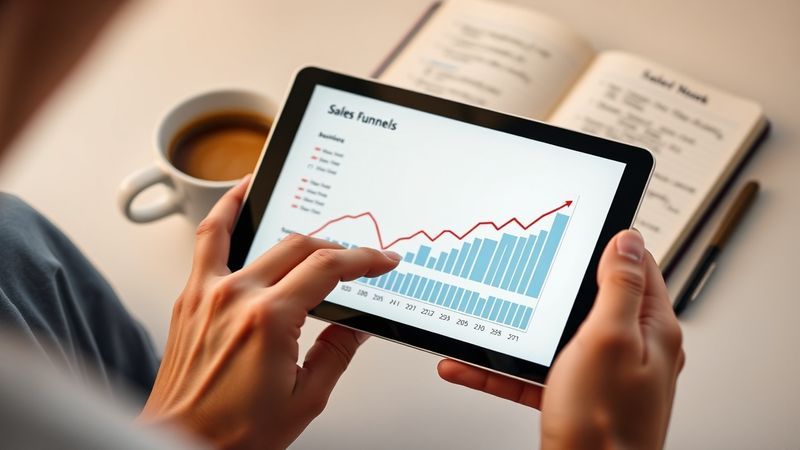
A sales funnel is the path your customer takes from first discovering you to becoming a paying customer. Simple concept, right? But here's where most businesses screw up: they think of it as a one-way street.
The reality is your funnel should look more like a customer journey with multiple entry points, feedback loops, and exit ramps. People don't move linearly through awareness → interest → decision → purchase. They bounce around, research on their phones, abandon carts, come back weeks later.
According to HubSpot, only 25% of leads are actually ready to buy when they first enter your funnel. That means 75% of your potential customers need nurturing, follow-up, and multiple touchpoints.
The biggest mistake? Treating every visitor like they're ready to buy right now. Spoiler: they're not.The 5 Stages of an Effective Sales Funnel
Here's the framework I use — it's straightforward but deadly effective when implemented correctly:
| Stage | Goal | Key Metric | Typical Conversion Rate |
|---|---|---|---|
| Awareness | Get discovered | Traffic volume | N/A |
| Interest | Capture attention | CTR, form fills | 2-5% |
| Consideration | Build trust | Email open/click | 20-40% |
| Intent | Create desire | Product page views | 5-15% |
| Purchase | Remove friction | Checkout completion | 1-3% |
Notice something? Each stage has a lower conversion rate than the previous one. That's normal. Your job is to optimize each step so the drop-off is minimal.
Stage 1: Awareness — How to Get Noticed
This is where most people burn money. They throw ads at cold audiences without understanding who they're targeting or what message will resonate.
The awareness stage is about reaching the right people with the right message at the right time.Here's what works:
Content Marketing — Blog posts, videos, podcasts that answer questions your ideal customers are already asking. This isn't about selling; it's about becoming a trusted resource. Social Media — But not the way most people do it. Instead of broadcasting, engage in conversations where your audience already hangs out. Join Facebook groups, participate in LinkedIn discussions, respond to Twitter threads. Paid Advertising — Only after you've nailed your targeting. Start with small budgets, test multiple audiences, and kill what doesn't work fast. SEO — Long-term play, but critical. Focus on keywords with commercial intent — people searching for solutions, not just information. Real talk: I once saw a client spend $3,000 on Instagram ads targeting everyone aged 18-65 in a major city. Conversion rate? 0.3%. We narrowed it to a specific profession, age range, and interest set, and the same budget generated 4x the leads.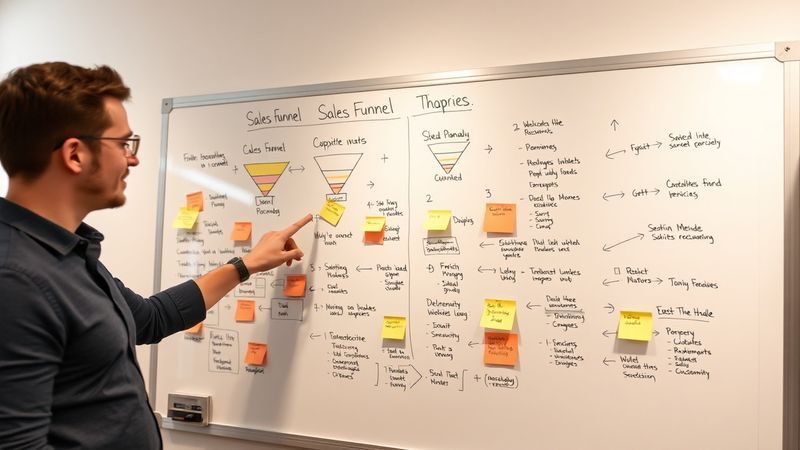
Stage 2: Interest — Capturing Attention
You've got their attention — now what? This is where your landing page, lead magnet, or initial offer comes in.
The interest stage is about exchanging value for contact information.Your lead magnet needs to solve a specific problem for a specific person. Generic ebooks don't cut it anymore. Here's what converts:
- Checklists — "The 7-Point Checklist for Launching Your First Product"
- Templates — "Fill-in-the-Blank Email Templates That Get 40% Open Rates"
- Calculators — "See How Much You Could Save with Our Tool"
- Free trials — Let them experience your product with no risk
Stage 3: Consideration — Building Trust
This is where most funnels fall apart. You've captured a lead, but now you need to nurture them without being annoying.
The consideration stage is about demonstrating expertise and building credibility.Here's what works:
Email Sequences — Not the spammy "buy now" type. Instead, send valuable content that addresses their specific pain points. Mix educational content with soft selling. Case Studies — Real stories of how you've helped others. Focus on before/after, specific results, and relatable problems. Social Proof — Testimonials, reviews, client logos. But make them specific. "Great product" is weak. "Helped me increase sales by 32% in 60 days" is powerful. Webinars/Workshops — Live or recorded sessions where you provide genuine value. The sales pitch comes at the end, not the beginning. According to Salesforce, 79% of marketing leads never convert to sales. Why? Lack of nurturing.I've seen businesses triple their conversion rates just by implementing a simple 5-email nurture sequence over 2 weeks.
Stage 4: Intent — Creating Desire
Your prospect is interested, they trust you, now you need to make them want what you're selling.
The intent stage is about showing them exactly how their life improves with your solution.This is where you:
Showcase Benefits, Not Features — "Save 10 hours per week" beats "Automated workflow system" every time. Create Urgency — Limited time offers, countdown timers, availability windows. But be genuine — fake scarcity kills trust. Offer Guarantees — Remove the risk. Money-back guarantees, free trials, satisfaction promises. Compare Alternatives — Help them understand why your solution is better than doing nothing or choosing a competitor. Pricing Transparency — Hidden costs kill conversions. Be upfront about what they're getting and what it costs. Personal anecdote: I once worked with a SaaS company that was hiding their pricing behind a "contact us" form. We made pricing public and added a comparison chart showing their value vs. competitors. Conversions jumped 28% overnight.Stage 5: Purchase — Removing Friction
You've done the hard work — now make buying stupid simple.
The purchase stage is about eliminating every possible barrier to conversion.Here's what kills conversions at checkout:
Too many form fields — Ask only what you absolutely need. Every additional field reduces completion rates. Complicated checkout process — One-page checkout beats multi-step every time. Limited payment options — Offer credit cards, PayPal, Apple Pay, Google Pay. The more options, the better. No guest checkout — Forcing account creation loses sales. Let them buy first, register later. Hidden fees — Shipping costs, taxes, service fees — show everything upfront. Technical issues — Broken forms, slow loading, mobile incompatibility. Test relentlessly. According to Baymard Institute, the average cart abandonment rate is 69.57%. That's insane. Most of it is preventable.Tools That Actually Help (Not Hype)
Let's cut through the noise. Here are the tools I actually use and recommend:
Landing Page Builders:- Unbounce — Great for A/B testing, but pricey ($99+/month)
- Leadpages — Simpler, more affordable ($37/month)
- BeeCastly — Includes landing pages with built-in CRM and automation (free plan available)
- Mailchimp — Good for beginners, but gets expensive fast
- ActiveCampaign — Powerful automation, steeper learning curve
- BeeCastly — Unified inbox, WhatsApp integration, free tier
- Google Analytics — Free, comprehensive, but complex
- Hotjar — Heatmaps and session recordings show user behavior
- BeeCastly — Built-in funnel analytics and conversion tracking
- HubSpot — Excellent free plan, but limited without paid upgrade
- Pipedrive — Sales-focused, intuitive interface
- BeeCastly — All-in-one with WhatsApp, email, SMS integration
- WhatsApp Business API — Enterprise-level, requires approval
- WATI — Mid-market solution, decent features
- BeeCastly — Bulk broadcasts, chatbots, auto-replies, QR pairing — all in one dashboard
Common Funnel Mistakes That Kill Conversions
Mistake #1: No Clear Value PropositionIf I have to think about what you're offering, I'm gone. Your value prop should be instantly clear.
Mistake #2: Asking for Too Much Too SoonDon't ask for a sales call on the first interaction. Build trust first.
Mistake #3: Ignoring Mobile UsersOver 50% of web traffic is mobile. If your funnel doesn't work perfectly on phones, you're losing half your potential customers.
Mistake #4: No Follow-upMost people don't buy on the first visit. If you're not following up, you're leaving money on the table.
Mistake #5: Complicated MessagingJargon, corporate speak, and vague benefits confuse people. Simple, clear language wins.
Mistake #6: Slow Loading TimesEvery second of delay reduces conversions. Aim for under 3 seconds on desktop, under 5 on mobile.
Mistake #7: No Social ProofPeople trust other people more than they trust you. Include testimonials, reviews, case studies.
Measuring What Matters
You can't improve what you don't measure. Here are the metrics that actually matter:
Awareness Stage:- Traffic sources and volume
- Cost per visitor
- Time on page
- Bounce rate
- Landing page conversion rate
- Cost per lead
- Lead quality score
- Email open rates (aim for 20-40%)
- Email click-through rates (aim for 2-5%)
- Time to first response
- Product page views
- Add to cart rate
- Wishlist additions
- Checkout completion rate
- Cart abandonment rate
- Customer acquisition cost
- Overall conversion rate (visitors → customers)
- Customer lifetime value
- Return on ad spend
Frequently Asked Questions
Q: How long should my sales funnel be?A: It depends on your product and audience. Simple products might need 3-4 steps; complex B2B solutions might need 8-10 touchpoints over weeks or months. Focus on removing friction, not hitting a specific length.
Q: What's a good conversion rate for a sales funnel?A: Industry averages vary wildly. E-commerce typically sees 1-3% conversion from product page to purchase. Lead generation landing pages often convert 2-5%. If you're above 5% overall, you're doing well.
Q: Should I use multiple funnels or one big funnel?A: Start with one funnel per primary customer journey. As you grow, segment by audience, product line, or buying intent. Multiple funnels let you personalize messaging but require more management.
Q: How often should I optimize my funnel?A: Constantly. I recommend weekly reviews of key metrics and monthly deep-dives. The businesses that win are the ones that test and iterate fastest.
Q: Do I need expensive tools to build a good funnel?A: Absolutely not. I've built high-converting funnels using free tools like Google Forms, Mailchimp's free plan, and basic landing pages. Tools help, but strategy matters more.
Q: How do I know if my funnel is broken?A: Look for big drop-offs between stages. If 1,000 people visit your landing page but only 2 sign up, your landing page is the problem. If 200 sign up but only 2 buy, your nurture sequence needs work.
Next Steps
Building a sales funnel that converts isn't rocket science, but it does require discipline, testing, and a willingness to kill your darlings.
Start simple. Pick one product or service, map out your ideal customer journey, and build a basic funnel. Test it with real traffic, measure what works, and improve what doesn't.
Want to try this approach without spending money? BeeCastly offers a free trial that includes landing pages, basic CRM, and WhatsApp integration — everything you need to build and test your first funnel.The businesses that succeed aren't the ones with the fanciest tools or the biggest budgets. They're the ones who understand their customers deeply and remove friction at every step.
Which step will you tackle first?
Comments (0)
No comments yet. Be the first to share your thoughts!